
HAMSTRING INJURY CAUSED BY LUMBO-PELVIC INSTABILITY: CAN COMPRESSION HELP?
HAMSTRING INJURY CAUSED BY LUMBO-PELVIC INSTABILITY – CAN COMPRESSION HELP?
What is lumbo-pelvic instability?
The lumbar spine and pelvic girdle are comprised of numerous structures including bones, muscles, ligaments and tendons. All these structures contribute to maintaining an appropriate posture of the trunk and hips that allows for efficient movement and function of the body. One of the main joints to consider when thinking about pelvic instability, is the sacroiliac joint. This is where the last section of vertebrae (sacrum) joins to the hip bones (ilium). The functional significance of this joint is to allow weight distribution from the trunk to the hips and lower limb. When some of these structures, such as muscles, ligaments or tendons, in the lumbar and pelvic regions are unable to function properly, optimum posture and weight distribution of the trunk and hips cannot be met which can cause pain. This is called lumbo-pelvic instability.
How can lumbo-pelvic instability occur?
- Lower back pain
- Post abdominal or pelvic surgery
- Pregnancy
- Muscle weakness in lumbo-pelvic stabilisers
How can lumbo-pelvic instability cause hamstring injuries?
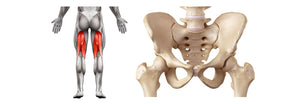
 Changes to the lumbo-pelvic biomechanics of the human body have a direct impact on the hamstring muscles due to their position relative to the hip joint. The hamstring muscles are located on the back of your thighs. The hamstrings are comprised of 3 muscles which all attach from the pelvis to the back of the knee. The role of these muscles in movement is primarily to flex the knee joint, but also plays a role in hip extension. When the pelvis or lumbar spine are not in an optimal position, weight transfer through the pelvis, trunk and lower limbs is impaired. This will place strain on the hamstring muscles due to their attachment onto the pelvis, which then can result in pain and possible hamstring injuries. Lumbar hyperlordosis increase the forward tilt of the pelvis which results in an increase in stretch and tension on the hamstring muscles. Similarly, pelvic asymmetry can also have this effect on the hamstring muscles, which can lead to hamstring tissue pathologies and result in both pain and an increased risk of further hamstring injury. There is a correlation between lower back pain and tight hamstring muscles which occurs in an effort of the body to compensate for pelvic instability. Tension in the hamstring muscles prevents the forward tilt of the pelvis which reduces the load on the spine, therefore resulting in less pain. However, increased reliability on the hamstrings may cause an increased risk of hamstring injury. Sacroiliac joint dysfunction resulting in pelvic asymmetry can increase the risk of hamstring muscle strains, however studies show mobilisation of this joint can increase muscle strength and flexibility as there is less stress on the muscles after mobilisation.
Prevention and recovery of hamstring injuries
Lumbo-pelvic instability is a risk factor for hamstring injuries; thus, lumbo-pelvic instability should be targeted to prevent hamstring injuries. Hamstring injuries can be caused due to improper pelvic position; therefore, this needs to be addressed for prevention and treatment of these injuries. Many patients with pelvic pain in the sacroiliac joint are prescribed pelvic compression belts or sacroiliac joint belts to assist in reducing the movement of this joint and decrease their pain. Studies show that these belts are effective when worn appropriately. Adding compression to stabilise the area reduces movement and pain while also providing proprioception awareness. What does this mean? Wearing the compression belt sends sensory messages to the brain which allows us to be aware of our lumbo-pelvic posture - we can use these signals to train ourselves to correct our movements.
A 2015 study found that for sportsmen both with and without hamstring injuries showed improvement in hamstring strength when wearing a pelvic compression belt. This tells us that using compression technology to stabilise the lumbo-pelvic area will in turn allow for better performance of the hamstring muscles.
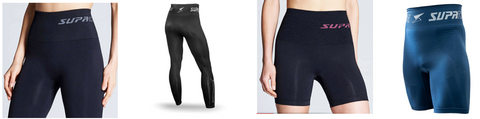
At Supacore, we have designed compression garments for both men and women that provide compression over the lumbar and pelvic region, including the sacroiliac joint, which acts as a sacroiliac joint belt. This technology provides lumbo-pelvic stability to the wearer due to the compression assisting the bodies lumbo-pelvic and core stabilising muscles, which results in less strain on the hamstring muscles therefore promoting both prevention and recovery of hamstring injuries. The seamless knitting design is not only sleek and appealing to the eye, it additionally provides comfort for the consumer. Supacore’s compression technology has been developed alongside physiotherapists to ensure these garments can provide adequate support or promote recovery for all wearers.
It is important to understand that sacroiliac compression garments should be used in conjunction to an exercise program to improve lumbo-pelvic instability.
What next?
After purchasing your Supacore compression garments, the next step is to participate in an exercise program. Eccentric hamstring training is shown to be the most effective way of recovering from hamstring injury. This involves a training program that focuses on elongating the hamstrings during muscle contractions. Some example exercises include Nordic drops, hamstring curls (emphasis on the downward phase of the hamstring curls) and heel sliders. For more information on hamstring injuries and injury prevention see the blog post ‘what can you do to prevent hamstring re-injury?’ and ‘hamstring injury treatment and prevention: 5 of the best videos and articles on the web’. Exercises to increase lumbo-pelvic stability are also a crucial part of the recovery process, especially if lumbo-pelvic instability is the cause of the hamstring injury. Find more information on lumbo-pelvic stability exercises, see the blog post ‘how to reduce your recurring osteitis pubis, groin and hip injuries’.
For the best recovery it is recommended to use a compression garment from Supacore that has a built-in sacroiliac belt and participate in an exercise program that focuses on both eccentric hamstring training and improving lumbo-pelvic instability.
If injuries persist, visit your local physiotherapist or other health professionals for more guidance and to promote your recovery.
For more information on pelvic instability, check out our other blogs including pregnancy and pelvic instability.
References
Arumugam, A., Milosavljevic, S., Woodley, S., & Sole, G. (2015). Effects of external pelvic compression on isokinetic strength of thigh muscles in sportsmen with and without hamstring injuries. Journal of science and medicine in sport, 10(3), 291- 302. Doi: 10.1016/j.sams.2014/05/009
Croisier, J. (2004). Factor associated with recurrent hamstring injuries. Sports medicine, 34(10), 681-695. Doi: 10.2165/00007256-200434100-00005
Macdonald, B. (2017). An investigation into the immediate effects of pelvic taping on hamstring eccentric force in an elite male sprinter – a case report. Physical therapy in sport, 28, 15-22. Doi: 10.1016/j.ptsp.2017.08.001
Panayi, S. (2010). The need for lumbar-pelvic assessment in the resolution of chronic hamstring strain. Journal of bodywork & movement therapies, 14(3), 294-298. Doi: 10.1016/j.jbmt.2009.08.004
Shield, A. J., & Bourne, N, M. (2017). Hamstring injury prevention practices in elite sport: Evidence for eccentric strength vs. lumbo-pelvic training. Sports medicine, 48(3), 513-524. Doi: 10.1007/s40279-017-0819-7
Hamstring injury and pelvic instability: common questions
Can pelvic instability lead to hamstring injury?
The hamstrings attach to the sitting bone at the back of the pelvis, so poor control of the pelvis and lower back can change how the hamstrings are loaded when you sprint, kick or change direction. That is why hamstring rehab often includes core and pelvic stability work, as explained above. A sports physio can assess your pelvic control.
Can compression shorts help a hamstring strain?
Compression does not heal a strain on its own, but firm support around the pelvis, lower back and upper hamstring can help you feel more stable as you return to training under your physio's guidance. Supacore hamstring injury compression uses the patented CORETECH® design with 25+ mmHg compression and is Registered with the TGA.
Which Supacore shorts suit a hamstring injury?
Men can choose the Lionel CORETECH® shorts or browse all men's hamstring compression. Women can choose the Mary CORETECH® shorts or browse women's hamstring compression. Size down when between sizes.
How can I lower the risk of hamstring re-injury?
A gradual return to sprinting, strength work for the hamstrings and good pelvic control all help. Our guide on how to prevent hamstring re-injury has more detail. Free shipping from A$199, ships worldwide, with 30-day free returns and free size exchanges.